Reading Reflections September 14: Science Fiction

I typically stay away from science fiction. I'm not deterred by science itself, rather the fact that the entire genre is based on the single question, "What if?" For me, pure speculation doesn't move me like realistic fiction does because characters tend to be less developed. After all, authors must focus on air-tight realities.
A lot of sci-fi revolves around saving the earth
Andy Weir's Project Hail Mary was hailed as "an epic story." But exactly how "epic" can it be? The trope that a single group of scientists must save the human race from extinction is the oldest sci-fi concept in the book. And watching Ryland Grace navigate this dilemma differs little from any other "save the earth" book.
The book dives into a technical explanation of the scientific concepts. This ensures that the plot is air tight but can also put the reader to sleep. At least the film hit the sweet spot: it explained the science simply and sufficiently.
Cloud Atlas (David Mitchell) is a more untraditional sci-fi novel
It follows six micro narratives throughout time with subtle links to each other. Even if the individual stories don't all fall into the speculative fiction category, the work as a whole does. It makes you wonder how stories, objects, and people are linked through time and space.
I recommend the book for its unique story structure rather than its literary excellence. The realistic, character-driven narratives were captivating, while at times it felt like nothing was happening in the others. Unfortunately, the story at the middle of the novel was difficult to follow. It's set in a post-apocalyptic society reduced to overly simplistic speech patterns with excessive contractions and word shortening. Ironically, Mitchell's writing shines the most here. He places us in the characters' world through vivid descriptions of their surroundings and obsessive believe in their deity. However, the the characters' speech patterns undermine the strength of their world. Having to labor through every line, every word makes it difficult to focus on anything else. As strong as the story might've been in plain prose, the way it was written misses the mark.
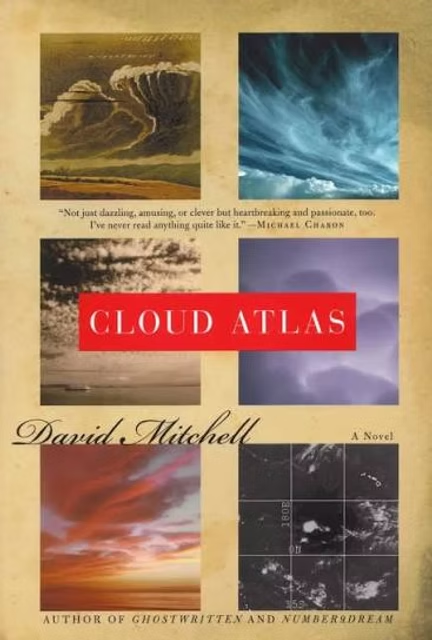
I'd originally added it to my reading list because it was rated as the Goodreads best book of the twenty-first century. While I don't believe it lived up to the hype, it was still a worthwhile read.
Science fiction might start to lean too heavily on Artificial Intelligence (AI)
AI brings infinite possibilities and endless stories that authors can write about these possibilities. I'm worried that the next generation of sci-fi novels will rely too heavily on what AI will look like and the consequences of mass AI adoption. AI sentience is a well-known trope (Neuromancer and 2001: A Space Odyssey come to mind). As AI becomes more mainstream, I can easily envision publishers taking on more novels related to the subject. In ten minutes, I already came up with three ideas.
Companies racing for the next big AI breakthrough to maximize profit at the expense of humanity. Examines the lengths that corporate executives will go to increase the bottom line.
A character-driven, emotionally-charged story of a traditional "nice guy" turning into an incel and falling in love with an AI chatbot (basically a contemporary version of Her).
A novel written about how AI isn't all that bad, with specific suggestions on how we can regulate it. Plot twist: an AI bot wrote the novel, and the "regulations" give AI more power. It convinces powerful people to apply the "regulations," thereby setting it free. And now it's gonna take over.
You see how cliché they sound? That's precisely what I'm worried about. And the worst part? We're definitely gonna see people employ AI to write them.
Note that I did not use AI to help me write this post.
I'm (probably) grossly oversimplifying the sci-fi genre.
While it doesn't quite require the world-building of fantasy, sci-fi necessitates creattivity of its own. I'm only covering the mainstream tropes, whereas the genre implies a realm of possibilities. It's not like realistic fiction novels don't follow similar arcs, even if the elements look slightly different.
Maybe you're the kind of person curious at how certain scenarios unfold. Or you might not care for science altogether. Regardless, I'd highly encourage you to read a popular sci-fi book or two and see if it's for you.
Read other editions of Reading Reflections on my blog


Comments